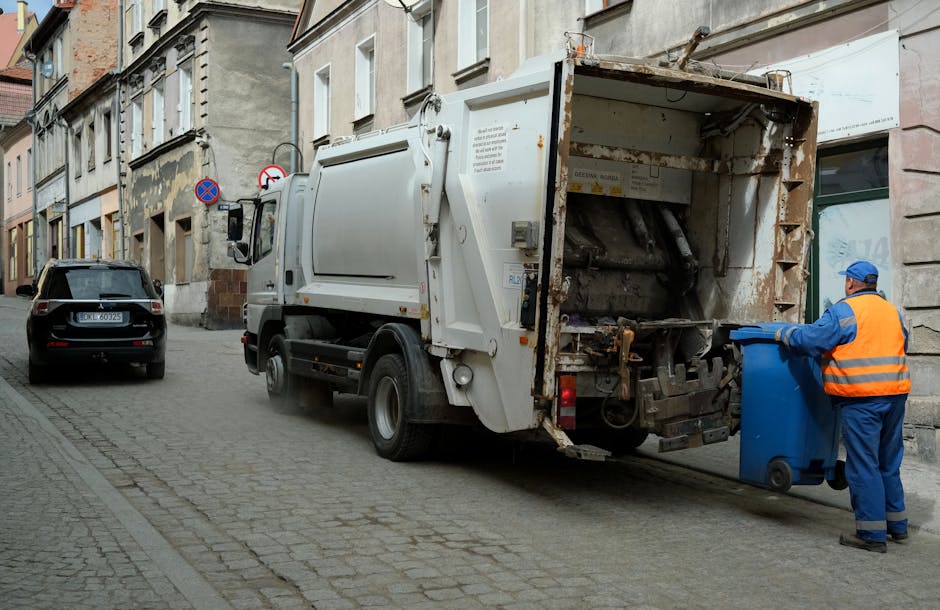
Avoid hidden charges in Erith rubbish removal quotes
If you have ever stared at a rubbish removal quote and thought, "That seems fine... but is it really?" you are not alone. Hidden extras can turn a straightforward clear-out into a frustrating, more expensive job than you expected. This guide on Avoid hidden charges in Erith rubbish removal quotes breaks down what to look for, how quotes are usually structured, and the simple checks that help you compare prices properly before anyone turns up with a van.
Erith homeowners, landlords, tenants, tradespeople, and local businesses all face the same problem: one quote looks cheap, another looks clearer, and a third is just vague enough to make you uneasy. The good news? Once you know which questions to ask, the warning signs become pretty obvious. And yes, that slightly suspicious "starting from" price often deserves a second look.
Why hidden charges matter
Hidden charges are not just annoying. They make it hard to compare services fairly, and they can leave you paying for things that should have been explained in the first place. In rubbish removal, the final price can change because of access issues, labour time, load size, weight, special waste handling, parking complications, or extra visits. Sometimes those extras are genuine. Sometimes they are simply unclear from the start.
For a lot of people in Erith, the issue is time as much as money. You may be clearing a garage before a sale, emptying a flat between tenancies, or dealing with builder's waste after a busy week on site. If the quote is unclear, it slows everything down. You end up making decisions in a rush, and that is when costs creep in. Not ideal.
To be fair, rubbish removal is not always simple. A single item might be awkwardly placed upstairs, or a pile of garden waste might be heavier than it first looked. But a trustworthy quote should explain the likely cost drivers before the job starts, not after the van is already outside and the clock is ticking.
If you want a broader look at how pricing is presented, it can help to review the company's pricing and quotes information alongside the service details for things like general waste removal or a more specific job such as garden clearance.
Expert summary: The best rubbish removal quote is not the cheapest line on the page. It is the one that clearly tells you what is included, what could change, and what will happen if the job turns out bigger than expected.
How rubbish removal quotes usually work
Most rubbish removal quotes are built from a few basic components. Once you understand them, you can spot where hidden charges tend to hide. The structure is usually a mix of load size, labour, access, disposal costs, and any special handling requirements.
1. Load size or volume
This is often the main pricing factor. The more space your waste takes up in the vehicle, the more you usually pay. A pile of loose bags is one thing; a bulky sofa, broken wardrobe, and pile of timber can fill a van much faster than expected. That is why a quote based on "a small load" or "half a load" should be clearly defined.
2. Labour time
If the team has to carry items from a loft, basement, back garden, or several flights of stairs, the job takes longer. That is normal. What is not normal is being told about labour charges only after the work has begun. A good quote will say whether loading is included and whether there are any assumptions about access.
3. Access and parking
Erith streets, like many parts of London, can present practical headaches. Parking permits, distance from the property to the vehicle, narrow hallways, or awkward staircases can all affect how long the job takes. A proper quote should ask about these things early. If nobody asked, that is a small warning light.
4. Waste type
Mixed household rubbish, garden debris, furniture, plasterboard, builders' rubble, office waste, and certain bulky items are not treated the same way. Special disposal costs may apply depending on what is being removed and how it must be processed. For example, a builders' clearance job often has different expectations from a simple sofa disposal.
5. Disposal and recycling fees
Responsible disposal is part of the service, not a bonus extra. That said, some providers may separate disposal charges from labour or transport. You need to know whether the quote is all-in or whether there are line items waiting to appear later. The clearer the breakdown, the easier your decision becomes.
When you are comparing quotes for a home or flat clear-out, it helps to understand the wider service too. Pages such as home clearance, house clearance, flat clearance, and loft clearance can give you a better sense of what the job may involve.
Key benefits and practical advantages
The biggest benefit of avoiding hidden charges is obvious: you keep control of the final cost. But there is more to it than that. Transparent quotes reduce stress, cut wasted time, and help you choose a provider based on service quality rather than guesswork.
- Budget control: You can plan the job without an unpleasant surprise at the end.
- Better comparisons: You compare like with like instead of comparing a vague offer with a detailed one.
- Less disruption: Clear pricing means fewer arguments, fewer delays, and fewer awkward phone calls on the day.
- Better service fit: The quote usually reveals whether the provider actually understands the job.
- More trust: A company that explains costs clearly is generally easier to work with.
There is also a practical side many people miss: a clear quote helps you choose the right service type. For instance, furniture-heavy jobs may be better discussed through furniture clearance or furniture disposal, while office clear-outs are better handled under office clearance. The service should match the waste, not just the cheapest sounding headline price.
Who this is for and when it makes sense
This matters for almost anyone arranging waste removal in Erith, but some people feel the risk more sharply than others.
Homeowners and tenants
If you are moving, decluttering, or clearing after renovations, the temptation is to accept the first quote that sounds reasonable. Fair enough. You have enough on your plate already. But if you are clearing a whole property, hidden extras can add up quickly.
Landlords and letting agents
Property turnaround often runs on tight deadlines. If a flat or house needs to be cleared before a new tenancy starts, you need predictable pricing and reliable timing. A vague quote can create messy handovers and uncomfortable delays.
Trades and builders
For renovation work, the price can shift if the load is mixed or heavier than expected. Builders' waste is often more variable than people think. If you are booking a job like builders' waste clearance, make sure the quote covers rubble, timber, plasterboard, and loading assumptions clearly.
Local businesses
Offices, shops, and small workspaces need scheduled, tidy waste removal with minimal disruption. If you are arranging business waste removal, hidden charges are especially frustrating because they can affect operating costs and sign-off procedures.
People with bulky or awkward waste
Garage clear-outs, loft clearances, and furniture disposal jobs often look simple until the team sees the actual access. If you know the waste is bulky, awkward, or spread over several rooms, this is exactly the time to get the quote detailed.
Step-by-step guidance
If you want to avoid hidden charges in Erith rubbish removal quotes, the process is straightforward. It does not need to be a big drama. A bit of structure goes a long way.
- List everything that needs removing. Be honest and complete. Include loose waste, bulky items, bags, broken furniture, garden debris, and anything stored in a loft, shed, or garage.
- Explain access clearly. Mention stairs, narrow hallways, shared entrances, parking restrictions, long walks from the property, and any lift restrictions.
- Ask what the quote includes. Labour, loading, transport, disposal, recycling, and VAT should all be clear if they apply.
- Check how the provider handles changes. Ask what happens if the load is bigger than expected or if extra items are added on the day.
- Request a breakdown. Even a simple written summary is better than a single vague number.
- Compare total cost, not headline price. The cheapest quote is not always the cheapest job once extras are added.
- Confirm payment terms. Check when payment is due and which methods are accepted. This avoids the classic end-of-job scramble.
A useful habit is to describe the job as if you were explaining it to a friend who has never seen the property. That small effort often flushes out the hidden details before they become hidden charges.
Expert tips for better results
In practice, a few small habits make a big difference. These are the things that tend to separate smooth jobs from frustrating ones.
Use photos, but do not rely on them alone
Photos help, especially for bulky furniture or garden waste. But they can hide access issues and depth. A photo of a pile in the corner does not always show how much is tucked behind it. If possible, send a few different angles and mention any awkward spots.
Ask the awkward question early
What would change the price? That is the question. Ask it directly. If the company is good, they will tell you exactly which factors could affect the final amount. If they dodge the question, that tells you plenty.
Be careful with "starting from" pricing
A starting price is not automatically bad. Sometimes it is the only honest way to quote before seeing the job. But it should be paired with clear conditions. If not, you are basically being asked to guess the rest. And nobody likes that game.
Check whether recycling is included
Many customers care about where the waste goes. A clear provider should explain whether items will be reused, recycled, or disposed of responsibly. If sustainability matters to you, it may also be worth reading the company's approach to recycling and sustainability.
Ask for written confirmation
A phone conversation is useful, but a written quote gives you something to refer back to if details change. Nothing fancy. Just enough to keep everyone aligned. It saves hassle later, honestly.
Common mistakes to avoid
Most hidden charge problems start with one of a few common mistakes. The good news is that all of them are avoidable.
- Only asking for a ballpark price: Useful at first, but not enough to book from.
- Forgetting to mention access issues: Stairs, distance, and parking matter more than many people expect.
- Assuming all waste is treated the same: Different materials can change the price.
- Not checking what is included: Transport, labour, loading, and disposal are not always bundled.
- Ignoring payment terms: Late surprises often come from unclear payment expectations.
- Choosing on price alone: A very cheap quote can be expensive once extras appear.
One small real-world example: someone clearing a garage may think the job is just "a few bits and pieces," then discover old paint tins, bricks, timber offcuts, and a broken freezer. Suddenly the job is not simple. Not huge, not impossible, just different. A proper quote should reflect that, and a proper customer should mention it.
Tools, resources and recommendations
You do not need fancy tools to avoid hidden charges. You need a good method and a bit of preparation.
- Phone photos: Capture the waste from several angles, including access routes.
- Room-by-room list: Handy for house, home, and flat clearances.
- Simple note app or paper checklist: Useful if you are sorting items over a few days.
- Measurements for bulky items: Especially helpful for wardrobes, sofas, beds, desks, and appliances.
- Questions to ask the provider: What is included? What could change? Is disposal covered? Are there access charges?
If you are deciding which service fits your job best, the following pages are worth reviewing in context: garage clearance for stored junk and bulky odds-and-ends, house clearance for full property jobs, and furniture disposal when the main issue is old items that need safe removal.
It can also help to read the company's wider information on insurance and safety and their health and safety policy if you are booking a larger or more complex job. That is just sensible, really.
Law, compliance, standards and best practice
When waste is collected from homes or businesses, the legal and compliance side matters. You do not need to become an expert overnight, but you should expect the provider to follow proper UK waste-handling practice and to dispose of waste responsibly. In plain English, that means they should know where the waste goes, how it is separated, and what is allowed to be taken.
For customers, the practical takeaway is simple: do not assume compliance. Ask about it. Responsible operators are usually happy to explain how they handle loading, transport, disposal, and recycling. If a provider is vague about these basics, that is not reassuring.
Best practice also means clear terms and conditions, transparent payment processes, and a complaints route if something goes wrong. Those pages matter because they show how the company works behind the scenes, not just how it sounds in a quote. You may want to review terms and conditions, payment and security, and the complaints procedure before booking.
Options, methods and comparison table
Not every quote format is equally helpful. Some are designed to be transparent. Others leave too much room for surprise. Here is a simple comparison.
| Quote style | What it looks like | Risk of hidden charges | Best use |
|---|---|---|---|
| Fixed all-in quote | One clear price with stated inclusions | Low, if the job details are accurate | Known loads, clear access, straightforward removals |
| Range estimate | Price range depending on final load or access | Medium | Jobs with some unknowns, like mixed waste or larger clearances |
| Starting-from price | Low headline price with conditions | High if terms are unclear | Only when followed by a detailed explanation |
| On-site assessment quote | Price confirmed after viewing the waste | Usually lower, if explained properly | Large, awkward, or complicated jobs |
In general, a fixed quote is the easiest to trust when the job is straightforward. A site visit or detailed assessment can be better for jobs involving lofts, garages, builders' waste, or large furniture. The method matters less than the clarity. That is the real point.
Case study or real-world example
Here is a realistic scenario from the kind of work people often arrange in Erith. A family wants to clear a two-bedroom flat before a move. At first, they think it is just a few black bags, a wardrobe, and an old sofa. Then they open the storage cupboard, find broken shelving, a vacuum, some box loads from the loft, and a couple of awkward items near the communal entrance. Small job? Not quite.
One provider gives a quick quote with no breakdown. Another asks for photos, checks access, and confirms whether the lift works, whether parking is nearby, and whether the sofa needs to be carried through a narrow stairwell. That second quote may not look as low at first glance, but it is far more useful. When the moving day arrives, the family knows what to expect. No last-minute add-ons, no awkward "we didn't realise" conversation, no surprise extra line on the invoice.
That is usually how the best rubbish removal experiences go. Nothing flashy. Just clear communication and a price that actually means something.
Practical checklist
Use this before you accept any Erith rubbish removal quote:
- Have I listed every item to be removed?
- Have I explained access, stairs, parking, and distance from the property?
- Do I know whether labour and loading are included?
- Do I understand how waste type affects the price?
- Is disposal included in the quote?
- Have I asked what could change the final cost?
- Is the quote written down clearly?
- Have I compared the full cost rather than just the headline price?
- Do I know the payment terms?
- Do I feel comfortable that the provider has been direct and specific?
If you can tick most of those off, you are in a much safer position. If not, pause. Ask again. A good provider will not mind a sensible question or two.
Conclusion
Hidden charges are rarely about one huge mistake. More often, they creep in through little gaps: unclear access, vague wording, assumptions about load size, or a quote that sounds friendly but says very little. The best way to avoid them is simple, even if it takes a few extra minutes: describe the job properly, ask direct questions, and insist on a clear breakdown before booking.
For Erith residents and businesses, that approach does more than protect your wallet. It reduces stress, improves trust, and makes the whole clearance feel more manageable. And on a busy day, that matters more than people admit.
When you are ready to compare a service properly, it can help to revisit the company's about us information and check the practical details on contact options if you need to ask a few final questions. A calm, clear conversation at the start usually saves a headache later. That is just the truth of it.
Get a free quote today and see how much you can save.
Frequently Asked Questions
What are hidden charges in rubbish removal quotes?
Hidden charges are extra costs that are not clearly explained when you first receive the quote. They can include access fees, labour additions, disposal charges, or costs for items that were not included in the original description.
How do I know if a rubbish removal quote is fair?
A fair quote should clearly explain what is included, what might change the price, and how the provider calculated the cost. If the quote is vague or unusually cheap, ask for more detail before agreeing.
Should rubbish removal quotes include disposal costs?
Usually, yes, if the provider is offering a full removal service. If disposal is not included, that should be stated plainly so you can compare total costs properly.
Why do access issues change the price?
Access affects how long the job takes and how difficult the loading will be. Stairs, long walking distances, tight hallways, or awkward parking can all increase labour time and therefore cost.
Is a starting-from price a bad sign?
Not necessarily. It becomes a problem only when it is not explained properly. A starting-from price should come with clear conditions so you know what could make the final amount rise.
Can I avoid hidden charges by sending photos?
Photos help a lot, but they are best used alongside a written description. Try to include multiple angles and mention access details, because images alone do not always show the full picture.
Are quotes for furniture removal different from general waste removal?
They can be. Bulky furniture often needs different handling from mixed household rubbish, so the pricing model may change depending on size, quantity, and access.
What should I ask before booking a rubbish removal service?
Ask what is included, what could change the price, whether disposal is included, and whether labour or loading is extra. Those four questions catch most of the common surprises.
Do business waste removal quotes have the same risks?
Yes, and sometimes more. Business jobs may involve scheduled collection, larger volumes, mixed waste types, or compliance considerations, so a clear written quote is especially important.
What if the waste is more than I expected on the day?
Tell the provider before work starts and ask how the price changes. A transparent company will explain the difference before proceeding, not after the job is finished.
Should I read terms and conditions before accepting a quote?
Yes. It is one of the simplest ways to spot extra charges, payment rules, cancellation terms, and service limits before you book.
How can I compare two rubbish removal quotes properly?
Compare the full service, not just the headline price. Look at labour, loading, disposal, access assumptions, payment terms, and whether the quote is fixed or only an estimate.
What if I want a greener disposal option?
Ask how the waste will be handled and whether recycling is part of the process. A reputable provider should be able to explain their recycling and sustainability approach in plain terms.